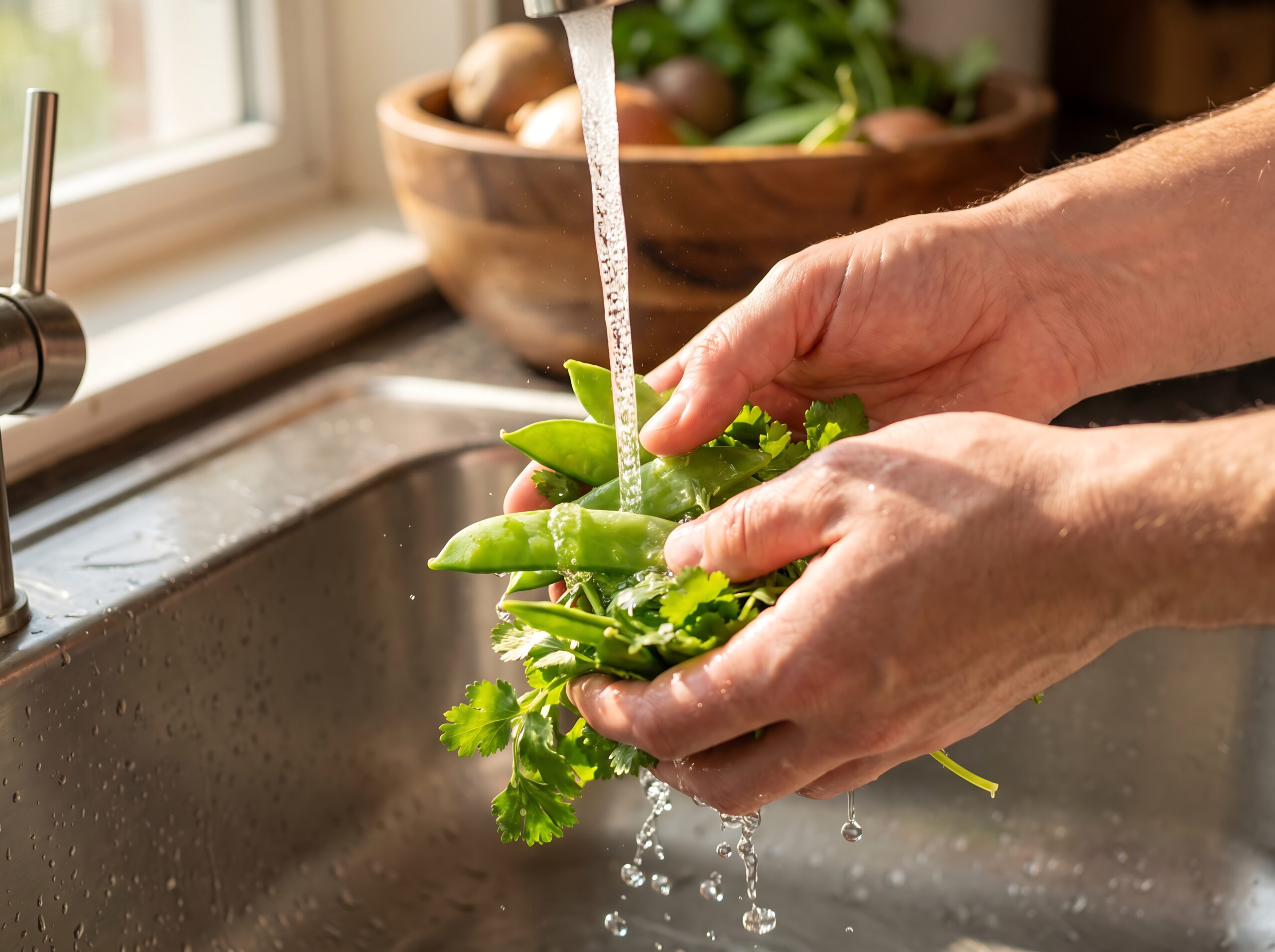
The 2026 cyclosporiasis outbreak isn’t just a complex food safety investigation, it’s a communications case study in what happens when no single trusted narrative is breaking through.
As of July 14, CDC issued a health advisory for domestically acquired cyclosporiasis and reported 1,645 confirmed U.S.-acquired cases across 34 states and is aware of more than 5,100 cases that require further analysis to confirm the illness as domestically acquired cyclosporiasis, while Michigan has reported 3,762 outbreak-period cases. Public health agencies have not identified a specific product, restaurant, grocer, grower or supplier as the confirmed source. In fact, several distinct investigations are running at once per the FDA, suggesting that this appears to not be just one outbreak but multiple co-occurring clusters.
Food safety investigations like this one increasingly face a new challenge: the public expects immediate answers, while parasites like Cyclospora operate on a much more complicated timeline. Unlike many foodborne illnesses that cause symptoms within hours or a day, Cyclospora often has an incubation period of about one week, with illness, or cyclosporiasis, sometimes appearing even later. By the time someone becomes sick, the contaminated food has often been consumed, discarded or forgotten, making it difficult for investigators to accurately reconstruct what was eaten and trace the source. This lag between exposure, illness and reporting can delay outbreak investigations, underscoring why identifying the source of Cyclospora outbreaks is often far more complex than the public expects.
That uncertainty has created a vacuum of information, which has become filled with finger pointing, fear-based food avoidance, “eat this not that” lists, and many foodservice providers, including perhaps your local pizza restaurant, moving swiftly to stop offering certain menu items amid the outbreak. Media coverage has expanded from official case counts to individual restaurant actions or suspected produce (e.g., lettuce) and what is safe to eat or what should be avoided. Conversations with #cyclospora and #cyclosporiasis on TikTok have racked up thousands of videos with millions of views sharing tips from creators on what foods to avoid, which foods are safe, how foods should be prepared to avoid getting sick, updates on how the outbreak is being tracked, and even how to monitor symptoms. News that some Taco Bell locations reportedly removed lettuce, pico de gallo, guacamole, cilantro and onion from menus as a precaution set the internet on fire with accusations they were responsible for the outbreak, yet food safety experts are cautioning people that it’s far more complex than just one restaurant chain or one outbreak source.
Removing items from a menu or store shelf out of an abundance of caution is a responsible consideration. But without a clear, coordinated explanation, each action becomes another signal consumers must interpret on their own. This is the swirl that food companies, growers, ingredient suppliers, restaurants, retailers and trade organizations should be watching closely and managing thoughtfully.
In the absence of a clear answer, especially when it pertains to food and illness, people do not wait patiently for one. They search, speculate, share screenshots, avoid foods and ask their friends, co-workers and doctors what is safe to eat. While the source in this outbreak may be identified eventually, the reputational damage has already occurred.
Food safety is critically important to the U.S. food system, but this outbreak shows why food safety communication must be treated as a pillar of trust, not only in response to a recall. For decades, industry, regulators and public-health agencies have relied on systems designed to protect consumers: surveillance, testing, traceback, supplier controls, restaurant protocols, recall processes and public advisories. Those systems matter. But the communications environment around them has changed.
Today, food safety response is more decentralized, while also being more visible and more vulnerable to fragmented interpretation. State agencies may have the timeliest local information while federal agencies are in the midst of the investigation. Companies may take precautionary supply-chain steps internally before they can say much externally. Trade associations may need to support members without appearing to defend a specific product. Meanwhile, reporters and social channels focus on what could be implicated before investigators can confirm the facts.
The lesson is not that industry should speak more loudly than public-health authorities or speculate before the facts are known. The lesson is that food companies cannot let uncertainty become silence.
When the answer is unknown, the responsible posture is to explain the process, show the controls, point people to credible guidance, identify and utilize third-party experts like food safety and public health experts who can be a source of information, and make clear what action is being taken to protect consumers while the investigation continues.
This is a license-to-operate moment. If food companies want consumers to trust them when there is no definitive answer yet, they need to have earned that trust before the crisis and demonstrate it during the crisis.
Three Key Actions for Food Companies to Consider
- Build the response system before the source is named. Outbreak communications move faster and with far less friction when the right people, relationships and decision pathways are already in place. Companies should proactively identify the internal leaders who need to be involved, including food safety, regulatory, legal, supply chain, sales, customer service, government affairs and communications. They should also map the external relationships that may matter in an incident, including key customers, trade association partners, food safety experts, public-health contacts, and state or local agencies where appropriate. The goal is to know who needs to be activated, how decisions will flow, and who has authority to communicate before pressure builds.
- Own the process without overstating the conclusion. Companies and trade groups should not wait for a confirmed source, traceback finding or agency update to begin communications planning. The right approach is to prepare a disciplined message architecture that can be tailored as facts become clearer, including but not limited to holding statements, employee FAQs, social response guidance, member alerts, media FAQs, and escalation language for different scenarios. These materials should separate confirmed facts from actions underway such as reviewing supplier records, validating traceback data, coordinating with customers and public health agencies, reinforcing food safety protocols, and preparing to act quickly if credible evidence points to a specific product, ingredient, facility or channel.
- Treat trust and narrative monitoring as active risk management. Traditional media, social channels, local health updates, customer complaints, operator questions, and posted restaurant or retailer notices all shape perception. Companies should monitor for misinformation, customer confusion, stakeholder concern and signs that demand is shifting because consumers do not know what to trust. Monitoring should also help identify what guidance stakeholders need next.
- Use consumer questions as a signal for what guidance is missing. If people are asking whether they can eat a product, substitute one product for another, change how they prepare or store a product, or serve it to children, older adults, pregnant people, or immunocompromised individuals, the organization or brand should be ready with clear, vetted answers across channels.
- Review planned recipe and lifestyle content before posting. In moments of heightened consumer concern, upbeat content can appear tone deaf if it ignores the broader “is it even safe?” conversation. Brands do not necessarily need to stop all recipe, health, nutrition or lifestyle content, but they should pressure-test timing, tone, ingredients, products featured and captions. As needed, consider prioritizing content that is helpful, calm and safety-aware and avoid implying that cooking, rinsing or substituting ingredients can make a recalled or potentially implicated product safe.
The Communications Lesson
The reality is there will be more outbreaks in the future. Some will have clear sources and some will not. In either case, the companies and organizations that fare best will be the ones that can communicate food safety as an operating discipline, not just a crisis response. The key is becoming a practical source of clarity, not just another voice of reassurance. This means giving partners and consumers information they can use without overstating what is known or implying that the risk is resolved before the facts support it.
In a polarized information environment, companies should not assume that reassurance from government agencies, industry groups or corporate spokespeople will be accepted at face value. Trust has to be earned through clear, usable guidance that helps people make decisions for themselves: what is known, what consumers should check, what they should do if they are concerned, where to find updates, and what precautions are already in place across sourcing, handling, testing, traceability and response.
The food industry cannot control every headline or every unknown in an investigation. But it can control whether we show up with transparency, coordination and authority. In moments like this, the question is not only “What is safe to eat?” – it is also “Who can consumers trust to help them understand what is known, what is being done and what comes next?”
If this has you thinking about how to build trust in a highly complex and challenging environment, let’s talk. Golin Ketchum’s Food, Agriculture & Nutrition Practice helps organizations shape the future of food, from farm to fork. With deep expertise across food, agriculture and nutrition, we challenge the status quo with breakthrough communication that deepens understanding and strengthens trust.
About the Author:
Matt Grant is a Vice President in Golin Ketchum’s Food, Agriculture & Nutrition Practice, where he specializes in corporate reputation and communications strategies for food and agriculture companies and associations. With more than 12 years of experience in communications and marketing, Matt helps clients navigate complex challenges, shape public narratives and build meaningful connections with key audiences. Prior to joining Golin Ketchum, Matt spent five years at the indoor farming startup BrightFarms, where he supported the company’s growth and communications strategy. Matt has a B.A. in Political Science from George Washington University.